
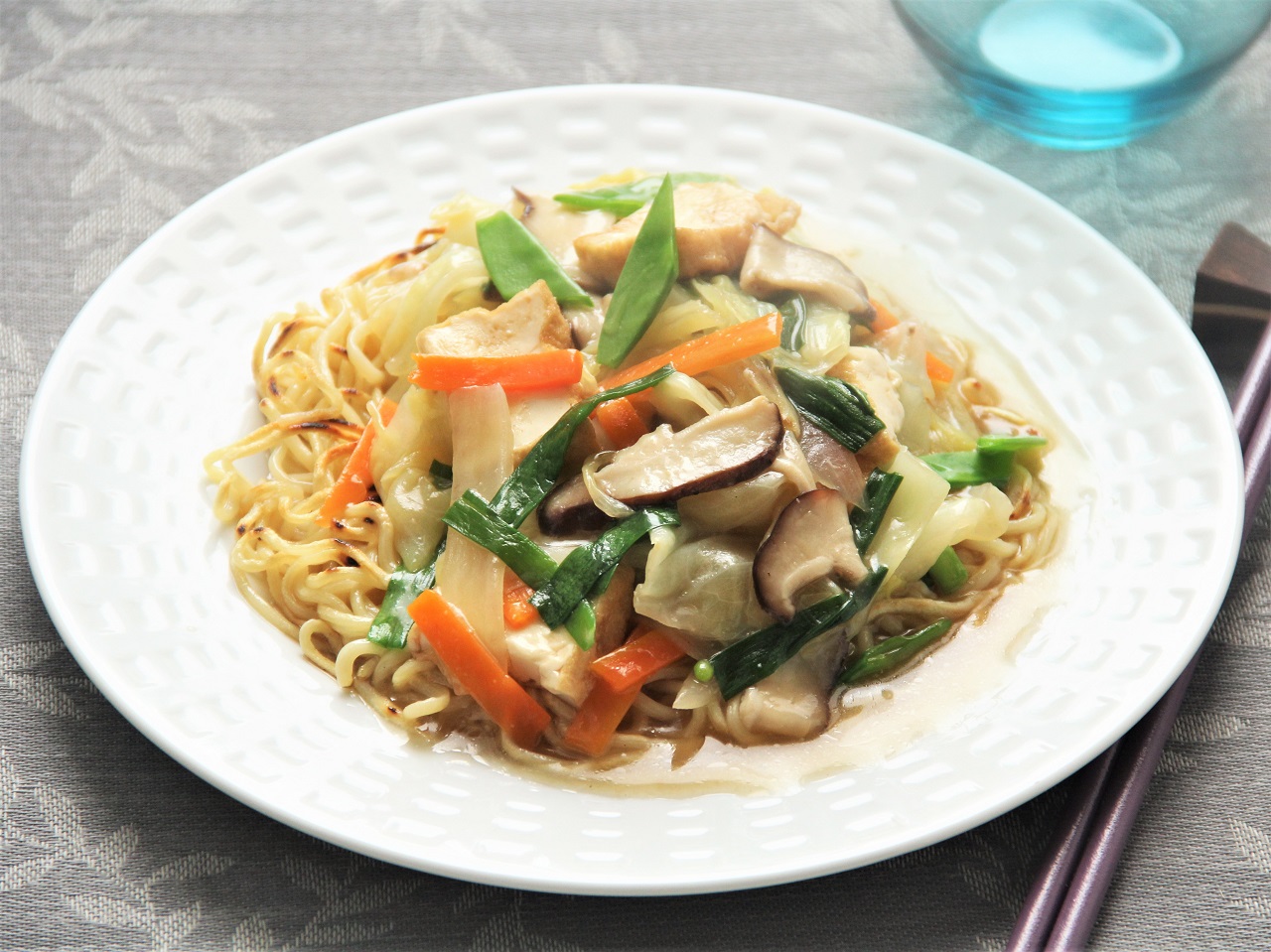
Saucy Vegetable Yakisoba (Ankake-Style)
Ankake yakisoba is the dish where stir-fried noodles get buried under a glossy, starch-thickened vegetable gravy — Chinese-Japanese comfort food that every ramen-adjacent restaurant in Japan serves. The vegan challenge is the stock, and the answer is kombu dashi: with soy sauce and sesame oil layered on top, the sauce has real depth without a packet of chicken powder in sight.
Crisp the noodles properly and don't skip the pour-over-at-the-table moment — the sizzle is half the meal.
Ingredients
- Yakisoba noodlessee substitutions1 portion
- Toasted sesame oil1 Tbsp
Vegetables
- Garlic chives (nira)or scallionsa small handful
- Cabbage1 leaf
- Fresh shiitake1 to 2 caps
- Atsuage (fried tofu)1/2 small block
- Carrot1/3
- Snow peasa handful
Sauce
- Kombu dashi2/3 cup
- Soy sauce2 tsp
- Salt & peppera little each
- Garlic, grateda little
- Potato starch + water (slurry)about 2 tsp starch in 1 Tbsp water
Nutrition
per serving🛒 Ingredient notes & substitutions
Yakisoba noodles: Steamed yakisoba noodles are in the refrigerated section of Asian groceries. Fresh ramen noodles or even chow mein noodles work — you want a wheat noodle you can pan-fry.
Vegetables: This is a clean-out-the-fridge dish at heart. Bok choy, bell pepper, bean sprouts, king oyster mushrooms — anything that stir-fries well can join.
Instructions
Fry the noodles in some of the sesame oil until they pick up crisp, toasty patches. Set them on a plate.
Cut all the vegetables and the atsuage into easy bites.
Add more sesame oil to the pan and stir-fry the vegetables and tofu with salt and pepper.
When everything has color, pour in the kombu dashi and bring it to a boil.
Season with the soy sauce and garlic. Taste — this is the moment to adjust.
Stir in the starch slurry and cook until the sauce turns glossy and thick.
Pour the vegetable gravy over the waiting noodles and eat immediately, while the contrast of crisp and silky is at its peak.
Tips
Most Chinese-style noodle dishes lean on chicken-soup powder. This one builds its backbone from kombu dashi, soy sauce and sesame oil instead — the combination is deep enough that nobody asks what's missing.
Salt to taste at the end: dashi brands vary, so the recipe deliberately seasons lightly and lets you finish it.